Dog Days Of Summer


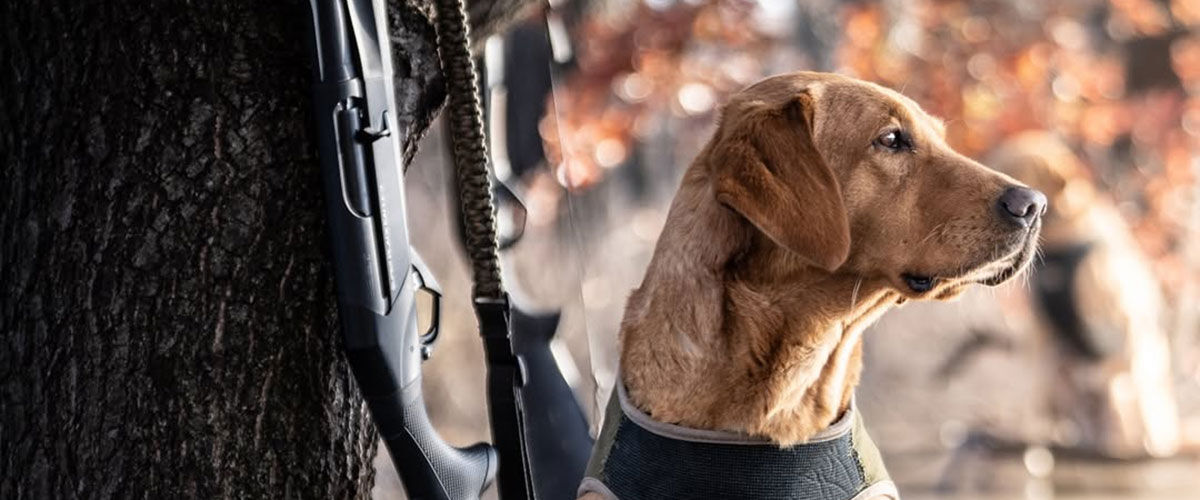
The familiar splash of decoy blocks hitting water broke the silence of the pre-dawn timber. I strapped a homemade tree stand around a medium-sized oak while my buddies finished tossing decoys into the hole. “Hank, place,” I said, helping my young Labrador retriever up onto his stand.
We each found trees to hide behind as the first shades of blue crept into the morning sky. Catching my breath from the several hundred-yard march through Arkansas public land, I started to wonder if I was asking too much of Hank. This was his first real hunt—and my first time hunting with a dog I’d trained myself.
I grew up chasing mallards in the famed Arkansas green timber. But this morning felt different. It wasn’t just about ducks. It was about the bond, the trust, and the training we’d put in together. I didn’t have long to dwell on it. The woods came alive with the raspy quacks of hen mallards in the distance.
It was trial by fire, but I hoped we were ready.
“Three minutes,” I called to the crew, glancing at my watch. Wings whistled through the treetops, and I let out a few soft notes on my single-reed call. When shooting light finally hit, we worked a lone drake through the trees. I whispered, “sit,” to Hank as the bird locked up.
A buddy dropped the drake just outside the decoys—perfect for a first retrieve. I gave Hank the command, and he launched into the water, confidently returning to the tree stand with bird in mouth. Delivered to hand, just like we’d practiced.
“Fifteen more like that,” I joked to myself.
Birds continued to work in, and we slowly filled a four-man limit. Hank marked every fall and picked up each bird like a veteran. On his first timber hunt, he retrieved every single mallard. It was right then I knew I’d never hunt the woods again without a dog by my side.
That hunt was many seasons ago. Hank went on to retrieve thousands of birds over 13 seasons before he passed last year. I think about that morning often—it was the beginning of something special.
Since then, I’ve had the chance to work with and hunt over several other young retrievers. And while not every outing is perfect, most of them have gone far smoother than that first day with Hank. Why? Because I learned how to better prepare a dog for real-world hunting situations.
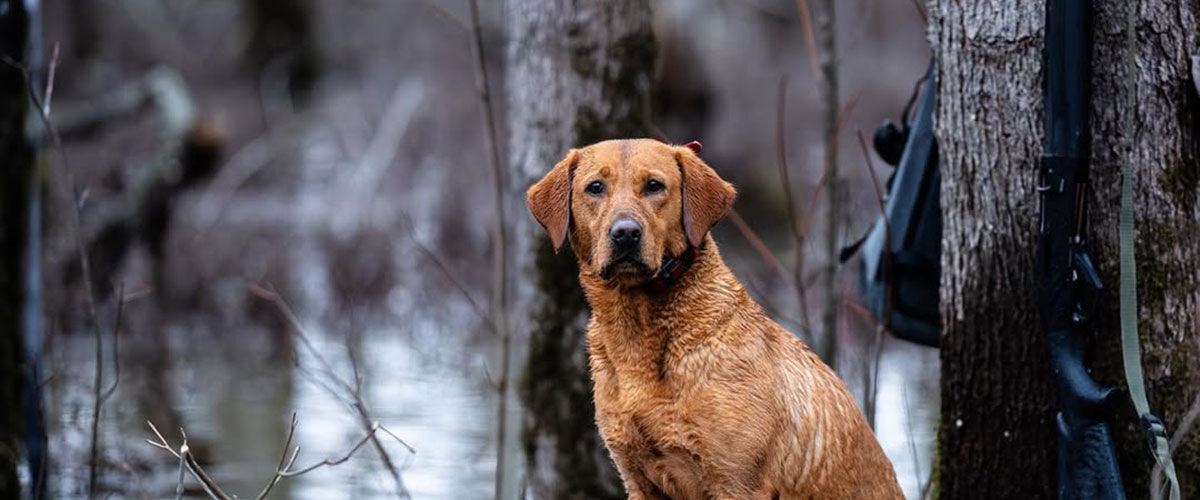
Looking back, I realized something important: all those hand-thrown bumpers that summer, all those sessions where Hank retrieved from the same tree stand—those moments mattered. He knew how to sit steady on that perch. He was comfortable seeing birds fall from that angle, with me beside him calling and shooting.
He was confident because we’d been in that scenario before—just in a different season.
These days, I hunt across the country. Sometimes we’re in dry fields in the Central Flyway, with the dog hidden in a layout blind. Other times, it’s a marsh, and my retriever needs to be steady on an elevated platform. And of course, we still spend a good number of days each season in flooded timber.
No matter the setting, one thing remains true: the dogs love it.
Why? Because they’re prepared. They’ve trained in each of those setups. They’ve retrieved bumpers from those exact blinds, platforms, and stands.
If you’re working with a young retriever, the best thing you can do—besides solid obedience—is to simulate hunting conditions during the off-season. Set up tree stands, layout blinds, and marsh platforms. Use real decoy spreads. Throw bumpers from realistic angles. Blow your duck or goose call. Fire starter pistols or blanks if your dog is ready for it. Practice how you play.
The more your dog experiences now, the less you’ll be teaching when the birds are flying for real.
A calm, steady dog that knows the routine is an asset in the blind. And more importantly, it makes the hunt more enjoyable—for both of you.
Every seasoned gundog starts out as a rookie. The difference between chaos and confidence in the blind often comes down to one thing: preparation. Hank taught me that. Now I get to pass it on.
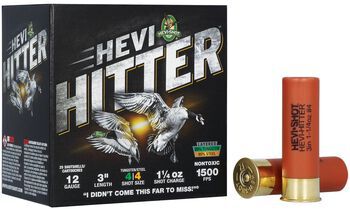
Balance the sheer power of tungsten with the patterning and practicality of steel to deliver better lethality on ducks and geese. HEVI-Shot® HEVI-Hitter™ devotes 20 percent of its payload to 12 g/cc tungsten and layers it over 80 percent steel shot. This carefully engineered blend brings out the best in both materials, offering a large, effective pattern at close and moderate targets, as well as the pellet count, power and density needed to drop distant birds.